
Beetles are the largest order of insects on Earth, and a surprising number of them are serious crop pests. Weevils, stem and wood borers, chafers, cucumber beetles and the infamous red palm weevil all belong to Coleoptera — and all share a critical weakness: their adults fly, and many fly at night toward light. That is where a solar insect killer earns its place in agricultural pest control and in practical beetle control, intercepting the airborne generation that starts each new infestation.
Most beetle damage is done by the larval or adult feeding stage, but the part you can actually catch is the winged adult. Larvae often live inside stems, roots, fruit or wood where sprays cannot reach. Adults, however, must leave the host to mate, disperse and find new plants — and on that journey they are vulnerable.
A vine weevil adult climbs a plant at night to notch leaves and lay eggs at the base. A red palm weevil flies to a neighboring palm to bore into the crown. A cucumber beetle disperses along a cucurbit row. Each of these flights is a window a solar bug zapper can close, night after night, with no chemical input.
The red palm weevil (Rhynchophorus ferrugineus) can kill a mature date or coconut palm in a single season. Adults are strongly attracted to UV and to the silhouette of a stressed palm. A solar insect killer hung at canopy height, among the crowns, draws weevils away from healthy trees and drops them into a sealed tray. The catch tray doubles as an early-warning system: a sudden jump in weevil counts tells the manager exactly which block to inspect.
Vine weevil (Otiorhynchus) adults notch leaves and lay eggs that hatch into root-feeding grubs. Because the adult is nocturnal and phototactic, margin-deployed traps sharply reduce egg-laying pressure on the canopy and roots.
The rice water weevil attacks seedlings and young plants, and its adults fly in from bunds and canal banks at dusk. Bund-placed solar insect killers intercept the incoming flight before colonization, protecting the tillering stage when residues matter most.
The coffee berry borer (Hypothenemus hampei) is a tiny beetle that bores into the cherry. While the larval stage hides inside the fruit, the adult beetle flies to find new cherries and is attracted to light. Traps reduce reinfestation pressure between sanitation rounds.
Cucumber beetles attack cucurbit seedlings and spread bacterial wilt; many are drawn to UV with a slight warm bias. A blended UV and blue-white board improves beetle control in these crops, and margin grids protect young transplants during the most vulnerable window.
Effective beetle control with light traps is a system, not a single device.
Most pest beetles have distinct emergence peaks tied to temperature and crop stage. Start traps at the first sign of adult activity — often at transplant, first flush or fruit set.
Ground-level units miss most of the flight. Mount at the height where adults actually travel: 3–6 m for palms, just above the young canopy for rice and vegetables, at row ends for vines.
Traps suppress the flying surplus, but sanitation removes the source. Remove infested fruit, destroyed pseudostems and stressed palms so the next generation has nowhere to start.
Avoid broad-spectrum sprays that kill ground beetles, rove beetles and other beneficial predators. This is the heart of modern farm pest management: let natural enemies handle the larvae while the trap trims the adults.
A solar bug zapper does not replace trunk injection, pheromone lures or professional labels. It complements them by attacking the flight stage continuously and chemical-free, which is why residue-conscious exporters and organic growers favor it.
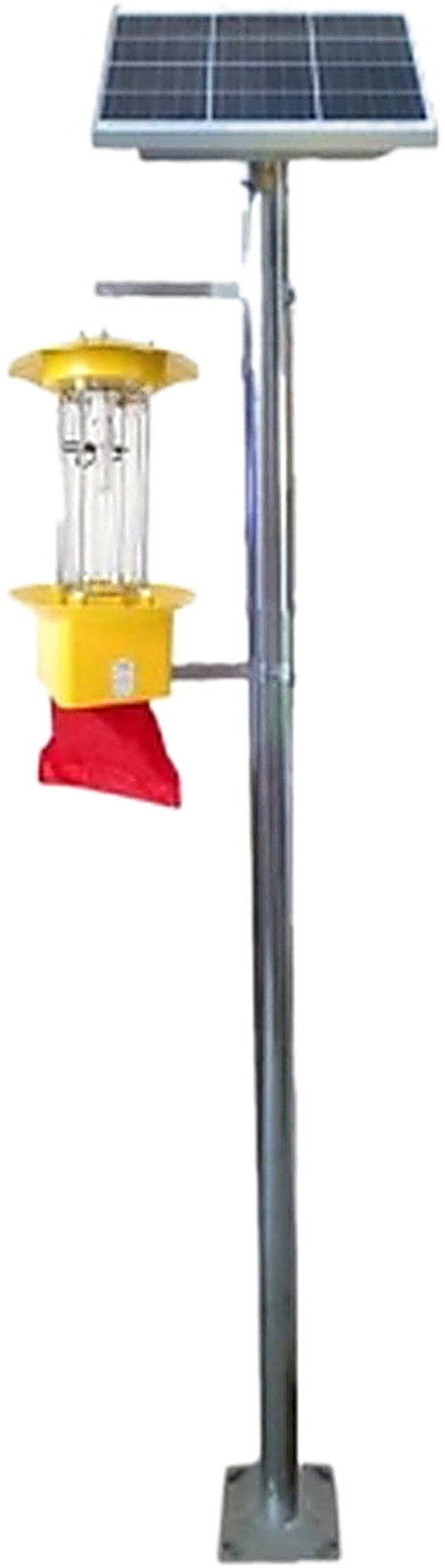


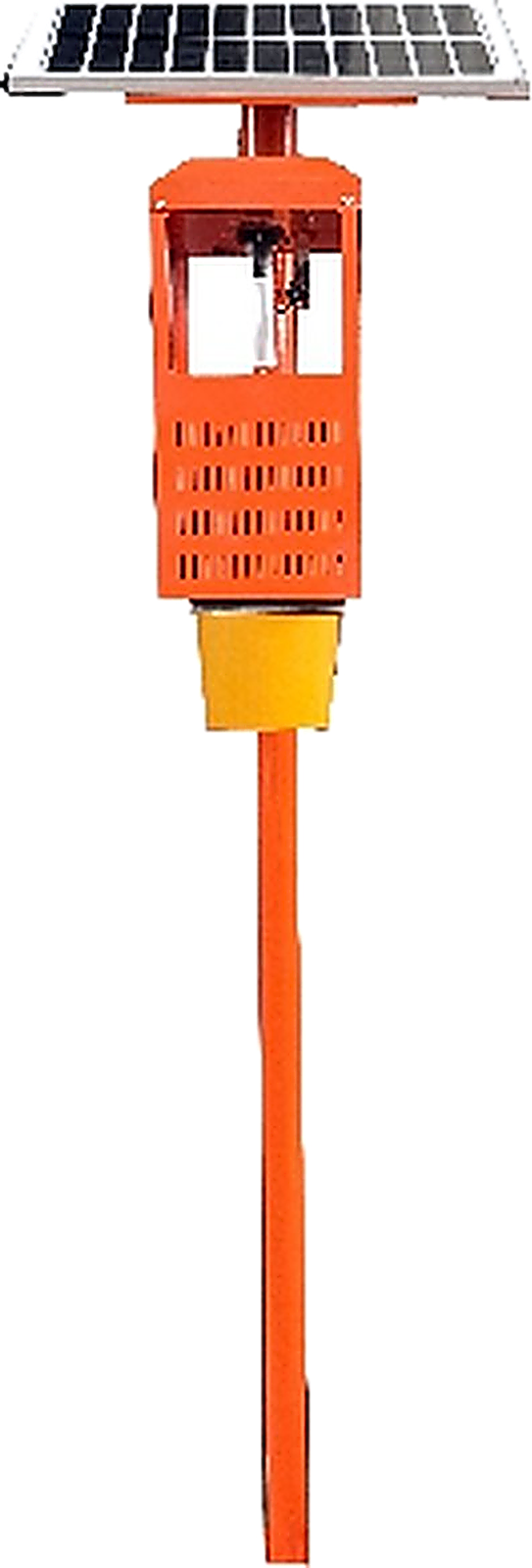
Use this guide alongside the references below to build a complete, defensible programme.
For deeper technical and regulatory context, see the FAO Integrated Pest Management and the EPA safe pest control.
Do solar insect killers kill beetles directly? They primarily capture the light-attracted flying adults, lowering reproduction and dispersal. Larvae inside plants are managed with sanitation, biological control and targeted products.
How many traps per hectare for beetle control? Marginal and in-row placement of roughly one unit per 1–2 hectares is typical, adjusted after a season of tray monitoring.
Can I combine light traps with pheromone lures? Yes. For a known borer or weevil species, a pheromone module narrows the catch and reduces bycatch, improving precision.
Will the trap save a palm from red palm weevil on its own? It strongly reduces adult colonization and gives early warning, but established infestations still need inspection and treatment. Use it as a core preventive layer.
Are the traps safe around beneficial insects? They are non-selective to flying adults, so placement and timing matter. Conserving ground predators by avoiding blanket sprays keeps the broader program balanced.
Weevils, borers and chafers are masters of hiding inside the plant — but they cannot reproduce without the adult flight, and that flight is drawn to light. A well-placed solar insect killer closes that window every night, making beetle control a continuous, chemical-free layer of agricultural pest control. Paired with sanitation and predator conservation, it is one of the most cost-effective moves a residues-conscious grower can make.