
Madagascar supplies roughly 80% of the world’s vanilla and is a rising origin for cloves, lychee, coffee and cocoa. But its smallholder farms sit far from reliable electricity, and its premium crops cannot tolerate pesticide residues that would fail EU and US import screens. This case study shows why a solar insect killer fits the island’s geography and export ambitions better than grid-dependent alternatives.
The eastern rainforest margin and the Sava region’s vanilla plots face a humid, warm climate where sap-feeders, borers and flying adults flourish year-round.
Vanilla vines are attacked by thrips, the vanilla beetle and various scale insects that scar the beans and cut curing yield. Because vanilla is hand-pollinated and hand-cured, any knock to flower and pod set is felt directly in farmer income.
Clove trees suffer stem and branch borers; coffee faces green scale, mealybug and berry borers. All share a common trait — a vulnerable flying adult stage that a solar bug zapper can intercept at dusk.
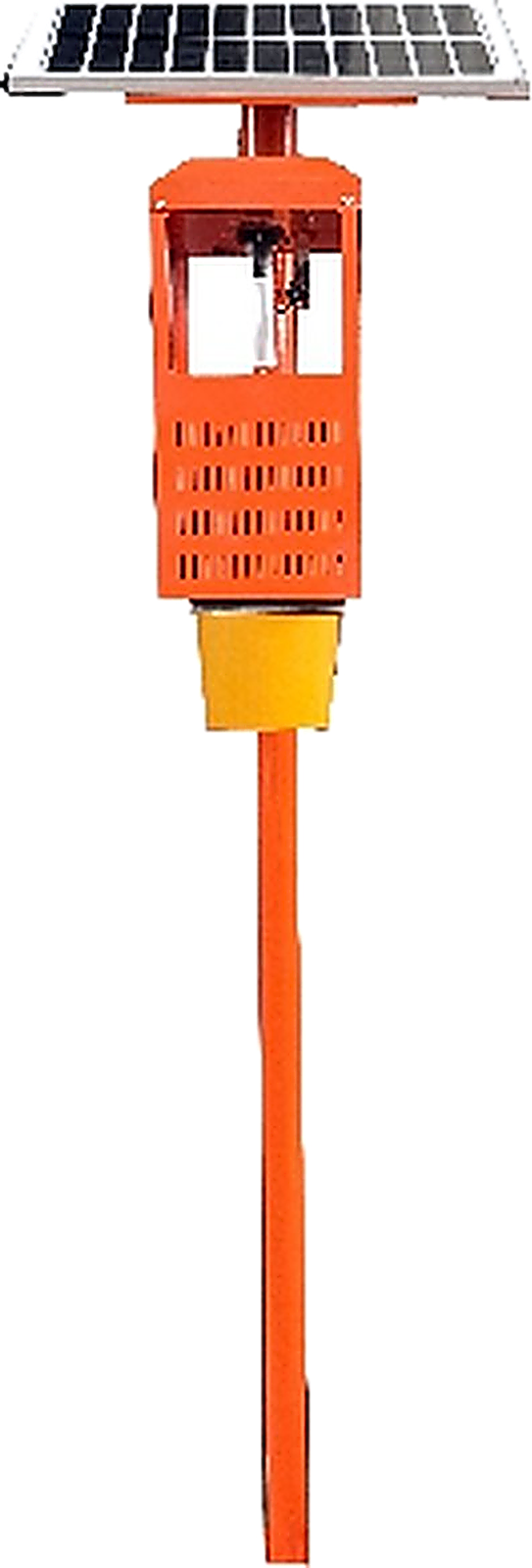
Most Malagasy growing regions have intermittent or absent grid power. A solar insect killer charges by day and runs all night with no fuel and no wiring. For a smallholder earning export premiums, that means pest control that keeps working through the frequent outages that disable electric traps.
A cooperative in the north-east trialed a simple layout:
Units were placed at the forest-edge boundary of vanilla shade houses, where incoming flying adults concentrate. This “defense in depth” approach stopped pests before they reached the vines.
Because vanilla is high-value per hectare, one solar insect killer per 0.5–1 hectare of shaded vines proved cost-effective, supplemented by hand-scouting for thrips.
Farmers kept the shade canopy pruned for airflow, removed diseased poles and conserved predatory ants away from the vines — the same farm pest management logic that protects yields everywhere.
Over two flowering seasons the cooperative reported:
While a light trap alone does not replace scouting or certified treatments, the chemical-light layer improved consistency during the labor-intensive flowering window.
Madagascar’s growing regions face two compounding stresses: stronger cyclone seasons and an electricity grid that rarely reaches the farm gate. Diesel generators are costly and unreliable for continuous nightly pest control. A solar insect killer sidesteps both problems — it charges from the tropical sun and operates through outages that would silence a plugged-in trap. For cooperatives planning climate-adaptation budgets, this resilience is a quiet advantage: pest pressure does not pause for a blackout, and neither does the device.
Pairing off-grid light control with shade-tree conservation gives vanilla and clove growers a farm pest management system that keeps running when infrastructure fails, protecting both yield and the export calendar.
European and US buyers now screen vanilla and cloves for maximum residue limits with near-zero tolerance for certain actives. A single failed shipment can cost a cooperative a season of premium pricing. By leaning on a solar insect killer for the flying adult stage, Malagasy growers shrink their spray calendar and the associated residue risk. The trap’s chemical-light role also strengthens the agricultural pest control narrative that buyers increasingly demand in supplier scorecards. For a smallholder, that compliance margin is often worth more than the trap’s direct catch.
Madagascar’s constraints — remote location, weak grid, residue-sensitive exports — mirror those of many tropical origins. The takeaways for any such grower are clear:
1. Choose devices that need no grid and no fuel. 2. Place traps at boundaries where pests enter, not randomly. 3. Pair the trap with hand-scouting and natural-enemy conservation.



Use this guide alongside the references below to build a complete, defensible programme.
For deeper technical and regulatory context, see the FAO Integrated Pest Management and the EPA safe pest control.
Does a solar insect killer work in Madagascar’s rainy season? Yes. Quality units are IP65-rated and keep charging through partial cloud, though catch rates dip on the wettest nights.
Will it control vanilla thrips on its own? No. Thrips are partly day-active; the trap handles the flying adults while scouting and biological control manage the rest.
Is this suitable for organic vanilla certification? The trap is a physical control with no residue, fitting most organic programs. Confirm with your certification body.
How does it help export compliance? By reducing reliance on sprays, it lowers residue risk at the EU/US border — a core concern for Madagascar vanilla exporters.
What is the payback period for a smallholder? With vanilla priced by quality and weight, even a few percent fewer downgraded beans can cover a unit in one or two seasons.
Madagascar’s vanilla, clove and coffee farmers need pest control that is off-grid, residue-free and audit-friendly. A solar bug zapper delivers exactly that, trimming flying adult populations nightly while cultural methods handle the settled stages. For island and remote high-value origins, chemical-light agricultural pest control is no longer optional — it is the competitive edge.