
Protected cultivation has exploded across small and mid-size farms, and the high tunnel — sometimes called a hoop house — is the workhorse structure behind it. These unheated, plastic-covered tunnels extend the season and boost yield, but they also trap warmth, humidity and insects in a closed space. A solar insect killer built for protected structures helps growers keep that environment clean. This guide covers where pests come from in a high tunnel, how to place a solar bug zapper inside it, and how the device fits a protected farm pest management plan.
Inside the structure, there is no wind to disperse insects and no cold night to slow them. Aphids, whiteflies and leafminers breed continuously, and without natural predators the population can explode in weeks. At the same time, the plastic keeps out the larger weather but not the tiny gaps where adults slip in on vent edges. Effective agricultural pest control here means managing a dense, enclosed ecosystem rather than an open field.
A solar insect killer targets the adult flying stage, which is precisely the life stage that does the most damage in protected crops.
Both reproduce fast on tender tunnel-grown leaves and excrete honeydew that fuels sooty mold. The adults are weak but persistent fliers, easily drawn to the lamp of a solar insect killer placed along the ridge. Capturing adults before they settle is the single biggest win for a grower.
Leafminer flies and thrips enter on transplants or through vents, then mine and scar the leaf. Their adults are nocturnal or crepuscular, exactly when a solar bug zapper is running. Continuous nightly capture lowers the adult pool hovering over the crop.
In propagation blocks with wet media, fungus gnats multiply and damage roots. While a trap will not fix overwatering, it removes the adult gnats on the wing, cutting the next generation in a protected farm pest management program.
Placement matters more in an enclosed structure than in a field, because air and insects move in predictable patterns under plastic.
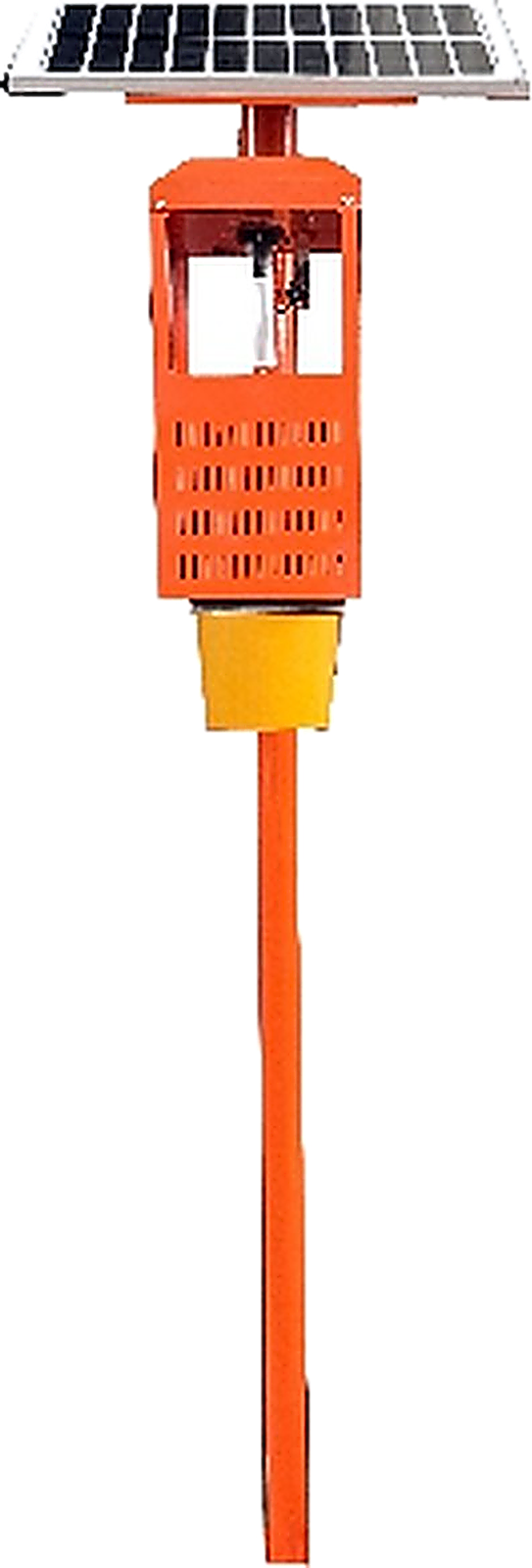
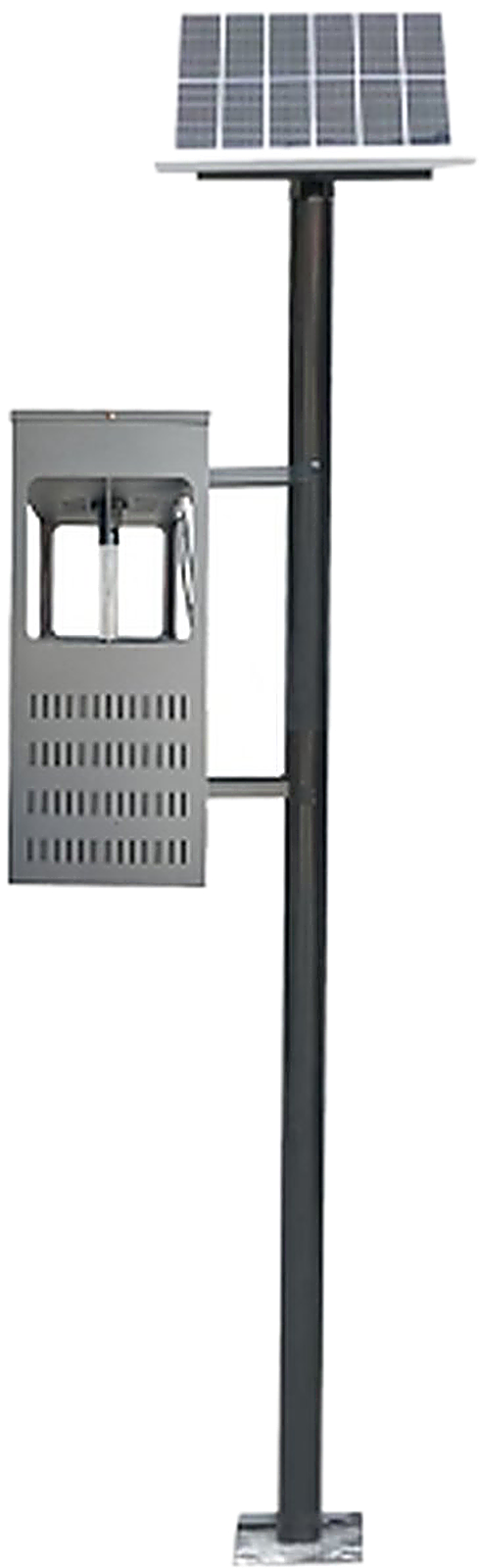
Mount a solar insect killer near the ridge or just above the crop canopy, where warm air — and the insects riding it — naturally collects. In a long house, one unit per 300–500 m² of bed is a sensible starting density, adjusted by lamp output and crop value.
A single solar bug zapper rarely covers a 30-meter tunnel alone. Stagger units so their light fields overlap without blinding each other, and keep them away from the door where daytime traffic disturbs the zone. This layout gives even agricultural pest control coverage from end to end of the structure.
A high tunnel is wet by design. Choose a solar insect killer rated for the humidity you actually see, and mount the control box where condensation drips will not pool. Because the device is solar-charged, you avoid running cables through the plastic — a clean install that protects both the crop and the electronics in a damp protected farm pest management setup.
A solar insect killer is strongest when paired with exclusion. Fit fine insect mesh over the vents and door so fewer adults enter, then let the solar bug zapper clean the air of those that do. Combine with scouting and yellow cards to confirm the adult counts are falling, and your agricultural pest control plan becomes measurable rather than hopeful.


Use this guide alongside the references below to build a complete, defensible programme.
For deeper technical and regulatory context, see the FAO Integrated Pest Management and the EPA safe pest control.
Will a solar insect killer work without direct sun inside a tunnel? Yes. A solar bug zapper charges from ambient daylight on its panel; even diffused light through the plastic keeps the battery topped for nightly operation in a high tunnel.
How many units do I need per high tunnel? As a starting point, one solar insect killer per 300–500 m² of bed, staggered along the ridge of the house and tuned to lamp output.
Does the trap replace vents and screens? No. A solar bug zapper captures adults that get in; fine mesh on vents and doors stops most from entering in the first place — together they form complete farm pest management.
Is it safe around food crops? Yes. It works without chemicals, leaving no residue on tunnel-grown vegetables, which protects agricultural pest control compliance.
Can I use the same device in a field and a high tunnel? Yes. A solar insect killer is portable; move it from the open field into the structure as the season shifts, keeping one solar bug zapper busy year-round.