
Ants rarely make the headline pest list, yet leaf-cutting ants and imported fire ants quietly cost farms billions in lost foliage, damaged seedlings and sting-related labour downtime. Traditional ant control leans almost entirely on broadcast baits and soil drenches — effective but heavy on chemistry and repeated passes. A solar insect killer adds a different, chemical-free layer to the ant control puzzle: it intercepts the nocturnal moths, beetles and flying attendants that ants farm or recruit around, and it reduces the overall insect pressure that makes ant colonies thrive.
This guide explains where light traps fit and where they do not.
Leaf-cutting ants (Atta and Acromyrmex species) strip leaves to farm fungus gardens, defoliating citrus, mango, coffee, vegetables and young tree plantations. Imported fire ants (Solenopsis invicta) build mounds in pastures and orchards, sting livestock and workers, and protect sap-feeding pests like mealybugs in exchange for honeydew. Both are social, persistent and quick to rebound after a single treatment.
Effective ant control is rarely a one-shot event. It is a farm pest management discipline: monitor, reduce the conditions that feed colonies, and apply targeted measures only where thresholds are crossed. A solar insect killer supports that discipline by lowering the broader flying-insect load that ant colonies exploit.
The solar bug zapper style trap does not poison ants directly, and it should not be sold as a fire-ant killer. Its role is complementary:
Used this way, a solar insect killer becomes one spoke of an integrated agricultural pest control plan rather than a standalone ant remedy.
Leaf-cutting ants are the most destructive ant group in Latin American orchards, nurseries and eucalyptus plantations. A single mature colony can strip a young citrus or coffee plant overnight. Their activity peaks around dusk and after rain — the same window a solar insect killer covers.
Combine the light trap with cultural steps: clear canopy-to-ground vegetation bridges, rotate traps to colony flight paths, and use targeted baiting only on active mounds. The trap reduces the competing nocturnal moth pressure, letting baiting do the precise work of ant control without constant reapplication.
Imported fire ants build mounds in warm, irrigated ground — orchards, turf, pasture and vegetable beds. Their stings cost labour time and livestock irritation, and they disperse fast along traded nursery stock.
Fire ant control relies on mound-specific bait and hot-spot treatment. A solar insect killer helps at the margins by reducing the flying insects that fire ants tend for honeydew, subtly lowering the resource base that lets colonies expand. It is a supporting act, not the lead treatment.
Be honest with buyers: a solar insect killer will not eradicate an established fire-ant mound or a mature leaf-cutting colony. Those need bait, biological control (e.g. Pseudacteon phorid flies) and sanitation. The trap’s value is in prevention and load reduction across the whole farm pest management system, buying time and cutting chemistry.
Place units near the crop edges where leaf damage and honeydew pests concentrate, 1.8–2.2 metres high, and keep trays emptied so catches stay readable. In pasture and orchard margins prone to fire ants, run the trap year-round so the monitoring signal never goes cold. Pair with a simple mound map so baiting stays targeted.



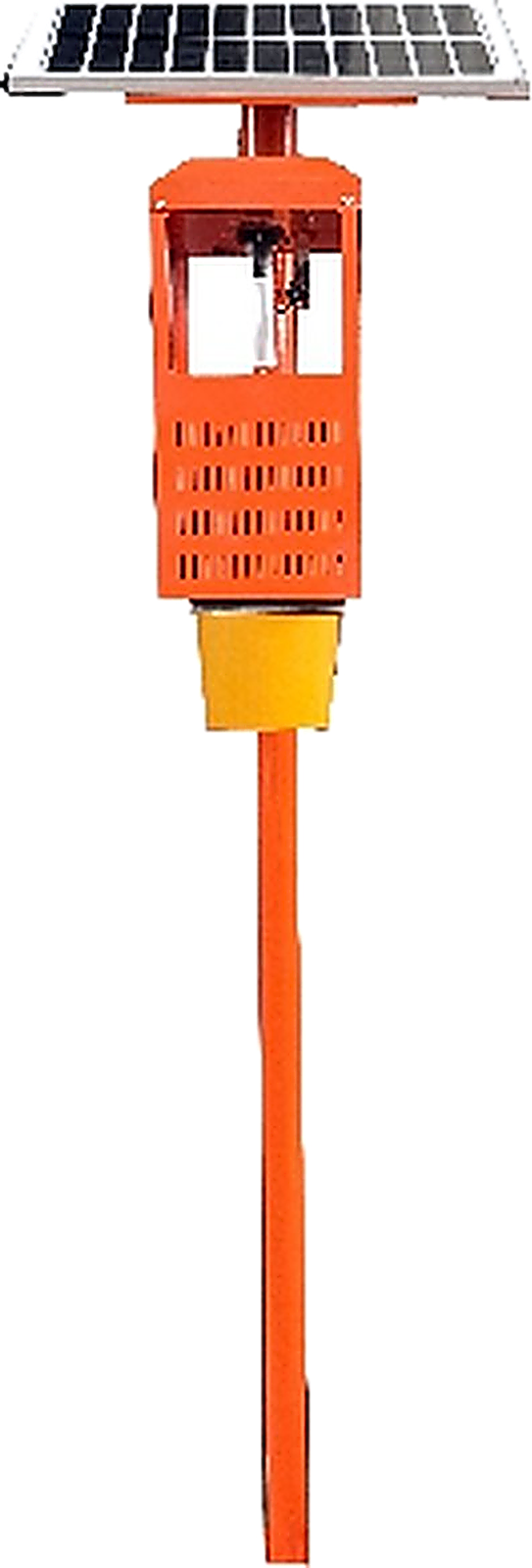
Use this guide alongside the references below to build a complete, defensible program.
For deeper technical and regulatory context, see the FAO Integrated Pest Management and the EPA safe pest control.
Can a solar insect killer kill fire ants directly?
No. It targets flying insects, not ground ants. It supports ant control by reducing the honeydew-associated moth pressure that fire ants farm, but mounds still need bait.
Does it help with leaf-cutting ants?
Indirectly. By cutting nocturnal moth and beetle pressure, it reduces the overall insect load that leaf-cutting colonies exploit, easing the broader farm pest management burden.
Is it safe around livestock and workers?
Yes. It is a trap, not a spray, leaving no soil or harvest residue, which is why it suits orchards and pasture where fire ants sting.
How many units do ant-prone farms need?
Use roughly one unit per 1.5–2 hectares of target edge, focusing on the blocks with the worst leaf damage and honeydew pressure.
Should I stop baiting if I install traps?
No. Keep targeted mound baiting for active colonies; let the solar insect killer handle the preventive, chemical-free layer of ant control.